
If you are planning a trip to Sri Lanka in July, you might be wondering how the seasonal monsoons will affect your holiday. Yes, July is an excellent time to visit Sri Lanka, provided you know exactly where to go. While the southwest coast experiences seasonal monsoon showers, the island’s magnificent east coast and historic Cultural Triangle enjoy clear blue skies, brilliant sunshine, and calm ocean waters. It is the perfect month for east-coast surfing, exploring ancient rock fortresses, and witnessing the famous elephant gathering in Minneriya.
Key Takeaways
- The east coast offers perfect, sunny beach conditions throughout July.
- Minneriya National Park hosts the largest gathering of Asian elephants in the world.
- July is peak surfing season in Arugam Bay on the southeast coast.
- To avoid rain, skip the southern beaches and head north or east.
Key Facts: Sri Lanka Travel in July
| Travel Metric | Expected Conditions in July |
| Best Beach Regions | Trincomalee, Nilaveli, Pasikudah, Arugam Bay |
| Average Coastal Temperature | 28°C – 32°C (82°F – 90°F) |
| Average Hill Country Temperature | 18°C – 22°C (64°F – 72°F) |
| Top Wildlife Attraction | The Elephant Gathering at Minneriya National Park |
| Sea Conditions (East Coast) | Calm, clear, and ideal for swimming or diving |
| Suggested Trip Length | 10 to 14 days |
Is July a good time to visit Sri Lanka?
Yes, July is a phenomenal time to visit Sri Lanka for travellers seeking warm weather, cultural festivals, and incredible wildlife. Because the island is governed by a dual monsoon system, bad weather in one region guarantees brilliant sunshine in another. Consequently, you simply need to adapt your itinerary to follow the sun.
During this month, the Yala monsoon brings wind and rain to the southern and western coasts. However, the eastern and northern regions remain entirely dry and sunny. As one of Sri Lanka’s best travel agencies, Oura Travel crafts highly rated custom Sri Lanka tours that effortlessly navigate the island’s weather patterns, ensuring you spend your days on pristine, sun-drenched beaches. Say you land in Colombo on a Tuesday morning; you might see a few rain clouds. However, just a few hours of driving eastward will quickly bring you under uninterrupted tropical sunshine.
What is the weather like in Sri Lanka in July?
Sri Lanka weather in July features hot, sunny days on the east coast and intermittent tropical showers in the southwest. According to Sri Lanka’s Department of Meteorology, the east coast typically receives just 50mm to 100mm of rain in July, making it the driest part of the country. Daytime temperatures in these sunny coastal areas average a balmy 30°C (86°F).
Meanwhile, the central highlands stay beautifully crisp and cool, with daytime temperatures hovering around 20°C (68°F). The humidity in the sunny regions remains manageable, though you will want to pack light, breathable fabrics. Because the ocean is exceptionally calm on the east coast, sea temperatures sit comfortably at 28°C (82°F), making it perfect for hours of snorkeling and swimming.
Comparing the Coasts in July
| Feature | East Coast (Trincomalee, Arugam Bay) | South & West Coast (Galle, Mirissa) |
| Weather | Dry, sunny, clear skies | Frequent showers, higher humidity |
| Sea Conditions | Calm, ideal for swimming and diving | Rough seas, strong undercurrents |
| Vibe | Lively peak season, excellent surfing | Quiet off-season, lush green landscapes |
| Average Rainfall | 50mm – 100mm | 175mm – 300mm |
Where should I go in Sri Lanka in July?
In July, you should go to the east coast for pristine beaches, the Cultural Triangle for ancient history, and the central plains for wildlife safaris. These regions boast their best weather of the year during the summer months. There are countless remarkable places to visit in Sri Lanka, but sticking to the northern and eastern dry zones guarantees a spectacular holiday.
The Sun-Drenched East Coast
Trincomalee, Nilaveli, and Pasikudah are the crown jewels of the east coast. Here, the ocean is flat, safe, and crystal clear. Snorkeling around Pigeon Island reveals vibrant coral reefs and harmless reef sharks. Further south, Arugam Bay comes alive in July. It is a world-class surfing destination that attracts wave-riders from across the globe, offering a relaxed, barefoot-bohemian atmosphere.
The Historic Cultural Triangle
July offers brilliant weather for exploring the Cultural Triangle, a region packed with ancient capitals and sacred monuments. The most famous landmark here is the Sigiriya Rock Fortress. According to UNESCO, this astonishing 5th-century palace was built atop a massive granite column by King Kashyapa. Climbing the rock early in the morning during July offers sweeping views of the lush, sunlit jungle canopy. For official tourism guidelines and heritage updates, you can always check with [suspicious link removed].
Can you see elephants in Sri Lanka in July?
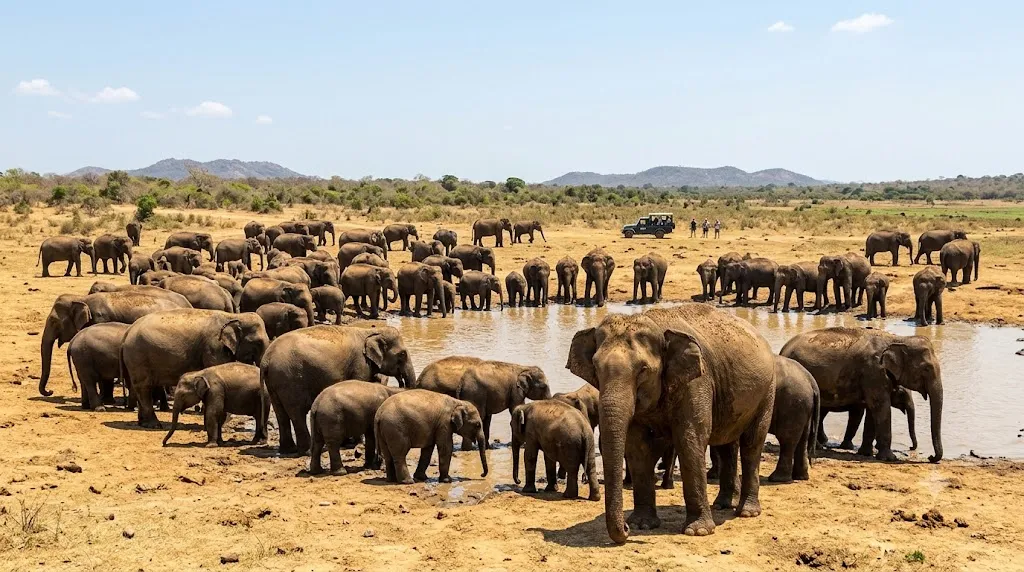
Yes, July is one of the absolute best months to see wild elephants in Sri Lanka. As the dry season takes hold, smaller water sources deep in the jungle begin to shrink. As a result, massive herds of elephants migrate out into the open to find hydration and fresh grass.
Minneriya National Park is the epicentre of this incredible natural phenomenon, known simply as “The Gathering.” According to the Department of Wildlife Conservation, hundreds of wild Asian elephants converge on the receding shores of the Minneriya reservoir during these summer months. Oura Travel’s local guides have run Minneriya safaris for over a decade, tracking these majestic herds daily to ensure our guests enjoy ethical, unforgettable wildlife sightings. If you want to experience this magic firsthand, booking a dedicated Safari Excursion is essential.
How to prepare for a July trip to Sri Lanka?
Preparing for a July trip requires packing lightweight clothing, securing your travel visa, and pre-booking accommodations in the popular eastern regions. Because July is a peak month for European summer holidays, the best east coast hotels fill up rapidly.
- Pack Smartly: Bring breathable cotton or linen clothes, plenty of reef-safe sunscreen, and a wide-brimmed hat. A light sweater is necessary if you plan to visit the cooler central highlands. When visiting temples, you must wear clothing that covers your shoulders and knees.
- Organise Visas Early: Always apply for your Electronic Travel Authorization (ETA) via the official Sri Lankan government portal before you fly.
- Book Transport: Relying on public buses with heavy luggage can be exhausting. Hiring a private driver-guide offers flexibility, local insight, and air-conditioned comfort.
If you prefer to skip the stress of logistics, you can rely on trusted local experts. Read About Us to learn how Oura Travel’s experienced team designs seamless, fully supported itineraries that take care of every detail, from airport pickup to final departure.
Frequently Asked Questions
Is it safe to swim in the ocean in July?
Yes, it is perfectly safe to swim on the east coast in July, where the waters at beaches like Trincomalee and Pasikudah are calm and clear. However, you should avoid swimming on the southern and western coasts during this time, as the monsoon creates rough seas and dangerous undercurrents.
How many days do you need in Sri Lanka in July?
You need at least 10 to 14 days to fully experience Sri Lanka during the summer. This timeframe allows you to comfortably travel from the international airport to the sunny eastern beaches, while stopping to explore cultural landmarks and national parks along the way.
Do I need to book accommodation in advance for July?
Yes, you should definitely book your accommodation well in advance for a July trip. Because the pleasant weather is concentrated on the east coast and in the Cultural Triangle, hotels in these specific regions experience high demand from international summer vacationers.
Are there any cultural festivals in July?
Yes, July and August are significant months for cultural festivals in Sri Lanka. The vibrant Kataragama Perahera often takes place in July, featuring traditional fire-walkers and drummers. Additionally, the world-famous Kandy Esala Perahera usually kicks off in late July or August, showcasing magnificent cultural processions.
Ready for Your Island Adventure?
Navigating seasonal weather doesn’t have to be complicated when you travel with local experts. From arranging your east coast beach retreat to booking front-row seats for wildlife safaris, Oura Travel ensures every moment of your holiday is extraordinary.
Ready to escape to the tropics? Plan your trip with Oura Travel today and let us build your perfect summer getaway.